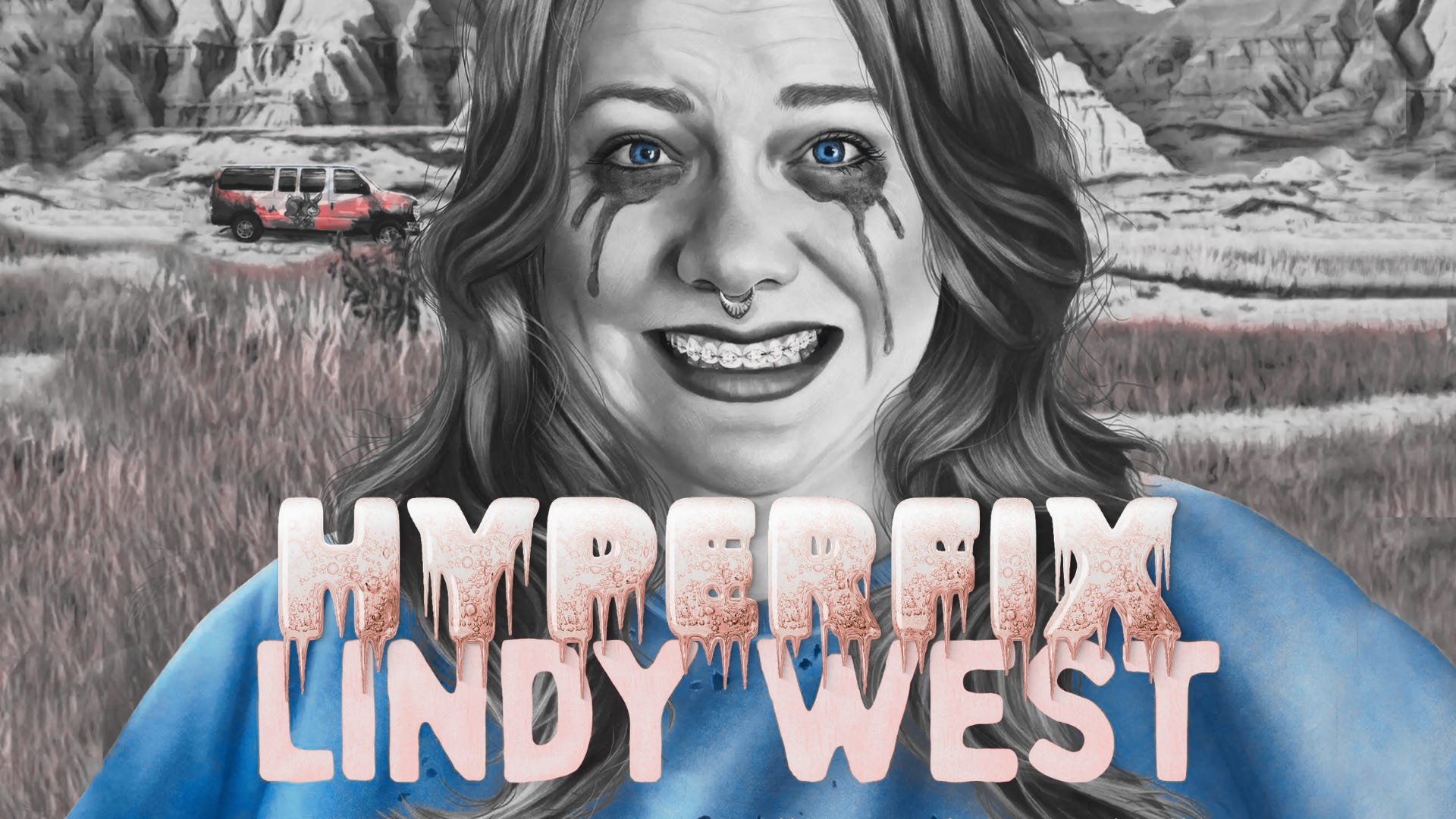
3.31.26 - HYPERFIX - #009
Welcome to a different kind of HYPERFIX! Normally, I write about a bunch of random obsessions. This week? We must talk discuss all things Lindy West, polyamory and millennial feminism. I wish it wasn’t this way, but I don’t believe I can move on until I get all the discourse out of my system. War is happening. An energy crisis looms. A memoir about a famous feminist whose self-esteem is so low she can’t imagine life without her husband so she dates his girlfriend and enters a throuple? This is the perfect distraction. Also, Lena Dunham has a memoir coming out and we must certainly make space for that in the discourse machine.
If you follow me on threads or twitter or bluesky, you’ve probably already seen me post up and down about Adult Braces. I wrote about it for Harper’s Bazaar. I’ve gone on podcasts to talk about it! I have shared a billion substacks on the topic already.
There have been two main reactions to this drama: “Holy shit, that’s messy, tell me everything!” and “Who is Lindy West? Who are these people taking over my feed?” Let’s start with the latter.
Who Are These People?
Lindy West was a writer for Jezebel in the 2010s. She’s a body positivity activist. She built her fanbase by openly sharing her personal struggles and writing funny, mean feminist reviews. She wrote a memoir called Shrill. It became a Hulu show with Aidy Bryant. The book is about Lindy learning she’s worthy when she marries a hot, thin man named Aham. Shrill wanted to show fat women they could have everything society said they didn’t deserve.
The right treats her like the poster girl for “millennial feminism.” It’s easier to tear down an ideology if its livelihood relies on one person. But West is not the cornerstone of millennial feminism. That’s not a thing. Even then she was criticized for representing white feminism while erasing black women’s work. 2010s “millennial” feminism came about on a post-monoculture, fractured internet that produced dozens of ideological variants. Not all of those groups celebrated or even knew who she was.
Personally, she didn’t make it into my bubble. I didn’t read Jezebel and I wasn’t on Twitter. My introduction to her work was when Shrill came to Hulu. For every millennial who calls West a hero, there’s an equal number who hear her name and shrug. Adult Braces cannot speak for a generation. It can only speak for Lindy West.
West wants Adult Braces to correct the record on Shrill’s happy ending. In an interview about her wedding, West said she wanted it to be a political act. In Adult Braces we see that marrying someone to make a point might not work out so well.
When they meet, Aham is fresh off a divorce. They break up, but get back together when Lindy’s father dies. As she grieves, Aham says they have to be non-monogamous if she wants him to stick around. He tells her monogamy is a form of ownership akin to slavery. Lindy says she can’t imagine life without Aham and assumes she just doesn’t get it because she’s a white woman from Seattle. Aham is mixed. His mother is a white American woman, but his father was Nigerian, so he must get these things more, we’re to assume.
So begins the path of coerced polyamory. The details on that aren’t great. Aham breaks her rules. He lies. He cheats. She finds out he has a girlfriend because a fan messages her. She finds out he has another girlfriend. She decides to go on a cross-country trip to figure out what she really wants. Along the way, she has some realizations. She feels like she’s a teenager, chasing unrequited love and her first kiss. She wonders what her life would be like if she were thin rather than look at who she actually is. It’s a heartbreaking read. She is all full of insecurities, but hasn’t reached the acceptance part of her journey even though she helped others get there.
Eventually, West makes her way back to Seattle and realizes all she wants is Aham. During her roadtrip, Aham and Roya have started flirting with Lindy via text. Aham orchestrates the careful exchanging of nudes. He tells Lindy that all he wants for his upcoming birthday is for Roya to visit. And so, the woman who just spent 300 pages showing us she’d put herself through hell for this man agrees. Lindy left to be alone, but never escapes Aham’s grip. There are no roadtrip hook-ups or flirty moments. In fact, West is disgusted by the idea of dating multiple men.
The idea of having another woman to handle a man though? Lindy realizes this is a benefit of ethical non-monogamy she can live with this. You see, Aham is a manbaby. For example, Lindy is an adult who wakes up and thinks about the things she has to do. She believes it is fair to ask her husband about these things in the morning. But, no. Aham can’t talk about anything serious before 10:00 am. If Lindy brings anything up before then, he will pout all day.
Never mind that Aham will apparently wake Lindy up at 5:30am to talk about basketball because that’s a sister wife duty that can be shared now:
Before Roya, Aham would beg Lindy to be sexy for him without giving her a space to feel sexy. Maybe he was too busy with his girlfriends to help his wife feel sexy and I think that makes him a pretty shitty husband on top of everything else.
Whatever. All of that is to say: What makes Aham so great? He rushes her into things. He doesn’t compromise. She’s at her lowest with him. But before Lindy can see if she might like a husband who can pay a bill at 9am, Roya (1st secret gf) enters. Roya’s presence makes Aham happy again. Lindy swears she hasn’t gotten lost in Aham, that this isn’t her losing herself, this is finding herself. She just happened to find herself right where Aham wanted.
We don’t learn much about Roya in the book even though Lindy is equally in love with her. Roya feels like a barely sketched out victim of unicorn hunting. If Aham was the trophy in Shrill, Roya is the trophy in Adult Braces. Roya is tiny, hot and goth. Roya is attracted to Lindy before she even meets her. That’s all Lindy thinks we need to know. Was Roya already polyamorous? How did she feel about Aham lying to Lindy? How do they support each other beyond Aham? If a man wrote about a woman the way West writes about Roya, 2010s Lindy West would’ve penned a scathing review in response!
SO BASICALLY they’re a polycule put together in a lab to combine every negative poly stereotype, the worst tropes of 2010s white feminism and just enough parasocial intrigue to create discourse.
Why Do People Care So Much?
Some people care because they think this represents the death of millennial feminism. Other people care because they hate that people are saying that. For some, Lindy West was their introduction to feminism and it’s hard to see she still deals with the insecurities she helped them overcome. If anything embodies the Girls quote, “I think that I may be the voice of my generation... or at least a voice of a generation,” it’s the fame 2010s online visibility provided writers like West. You really could be the voice of a niche micro-generation. So, I’m not downplaying what West was to her fans. I’m just not gonna act like her actions can tell us where an entire generation stands on feminism.
It’s also a useless way to engage with the book. Adult Braces is Lindy West begging us to let her be Lindy West, even if she doesn’t know who that is yet. This isn’t millennial feminism’s obituary it’s the outcome of a period that encouraged the blending of the personal and political across ideologies. For conservatives that can look like living the trad wife life, bulking up and living by the rules of the manosphere. For the left it can look like polycules and refusing to lose weight for fear of angering fans. It’s all performance for an audience.
It has nothing to do with left or right. It shows us the shallow outcome of making the personal political for social media. Both sides have fans who expect to see their heroes walk the walk online, even if it leads them off a cliff. In Lindy’s case, her marriage was proof of her worldview. If it ends in divorce, what will the trolls say? Will fans be let down? Adult Braces is a memoir about a woman who balances these groups on her shoulders in place of an angel and demon.
And if we’d left things there, this book would’ve left the zeitgeist last week.
OKAY!? So Why Do People STILL Care Then?
I know polyamory is still a big deal for some, but polyamory is not interesting enough to create this much discourse. Some people say it’s because people are uncomfortable seeing a fat girl win (or lose, depending on how you read the book.) Fatphobia absolutely plays a role in some responses to the book. However, some of the loudest critics have been fat women who aren’t uncomfortable with the book, they’re upset with throuple’s actions after the release.
The book initially received polite coverage! Slate wrote a profile that addressed the whole situation with empathy. It focused on Lindy and mentioned her partners are out of town working on a joint project. Lindy says she needs this book to float her family for awhile. Their response? They sent incredibly angry, rude emails. They called her bitter. They said she needed therapy. They basically insulted her in a way that 2010s Lindy West would not be okay with. How could people so progressive turn into incels over a perfectly fine profile?
In response, Aham said he meant to write “Free Palestine” in his email. In a since removed article, Lindy said it’s unfair to question Roya’s portrayal in the book because she’s Persian and the war is happening. She said it’s racist to ask if Roya and Aham contribute to “keeping the family afloat.” The throuple using political rhetoric to distract from their actions made everything worse. Slate updated the piece to include Aham’s email. A man embarrassing his wife during her book launch? The limits and hypocrisy of white feminism on display? It’s everything internet debates are made of.
Ok. So Do I Need To Read It?
If you want a juicy story about polyamory, you’ll be disappointed. If you want an empowering feminist tale, you will be disappointed. It’s about a woman who learns to be comfortable being at odds with herself if it pleases the person she loves. It’s about the ways we contort ourselves and convince ourselves we see something other than a mess. It’s about a woman who wonders if she’s an adult baby, but decides she likes being baby.
The writing is beautiful in sections. It’s also juvenile, like she uses her own writing as evidence she’s stuck in arrested development. In order to grow, she tries to free herself from the expectations of trolls and fans. By the end of her roadtrip, she decides the insecurities borne from her own expectations (a monogamous husband, feeling chosen, growing old and having kids) limit her more.
When the throuple sat down to write their emails to Slate, they had to know it would blow up. The attention economy sells books. I don’t think she expected this much attention, but what West writes about: being unable to see your worth because society has focused on your weight, race or class is an intersectional experience. You’ll probably relate to something in Adult Braces, just don’t go into it thinking it’s an advice book. Oddly enough, West did originally pitch it as a self-help book. I imagine that didn’t work when the prose made it obvious she’s still in need of help.
Anyway, I think it’s beautiful all of the internet has come together to unanimously say, Lindy, go find yourself, your husband is the problem. We promise, the divorce memoir will make you enough to cover alimony.
Your Poly Big Sister
I’ve decided to bring back my polyamory advice column in the wake of all this. It’ll be in your weekly Hyperfix for subscribers. It turns out there’s still a lot of bad poly advice out there! In an interview, Lindy said polyamory is a great cure for codependence. NO IT IS NOT! DO NOT DO IT FOR THAT!
Have questions? Need guidance? Submit below. First round will be next week because I’m tired of typing the word poly rn.